
Knowledge hub
How to Reduce Extractor Fan Noise: Causes, Fixes and Prevention
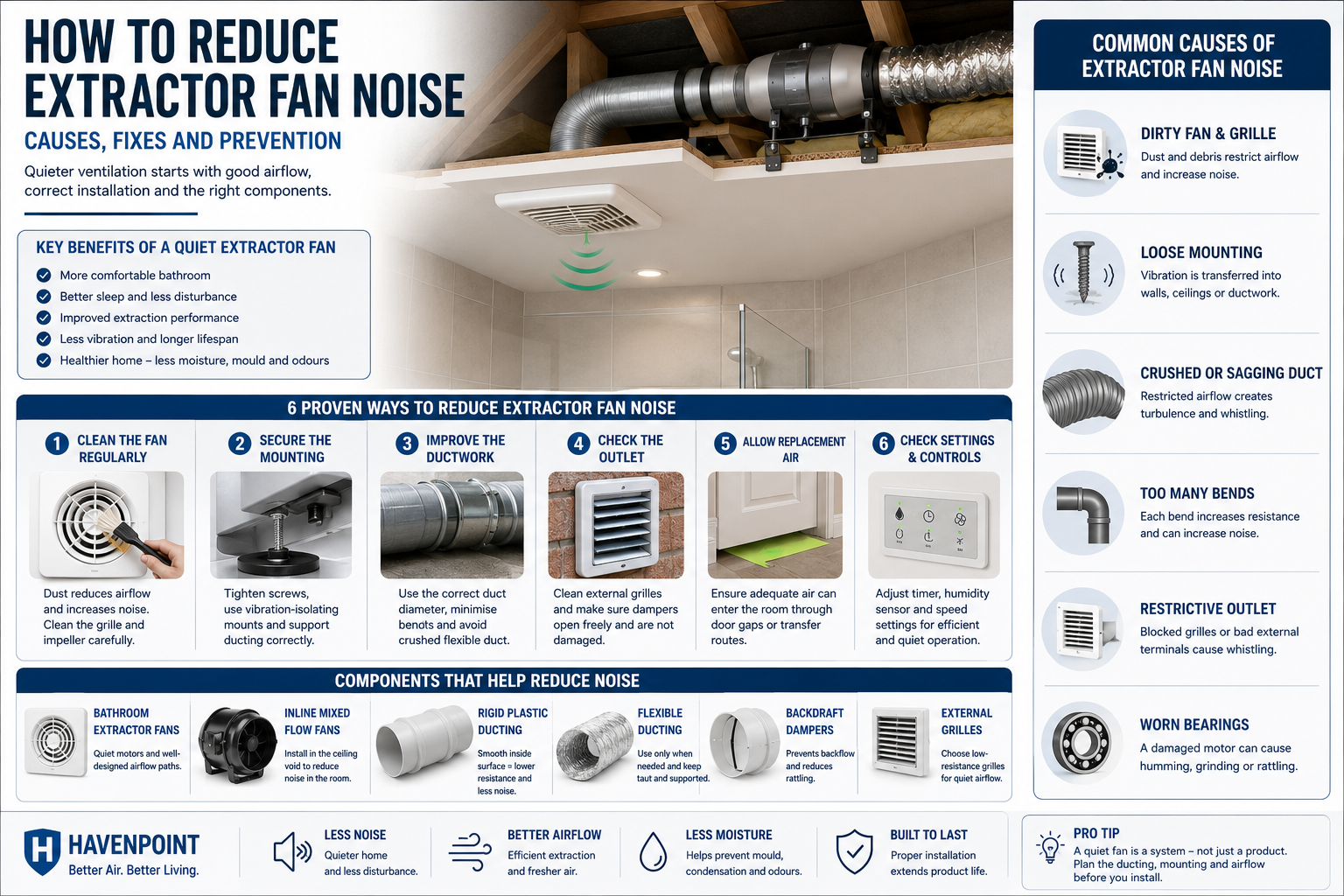
A noisy bathroom extractor fan is more than just an irritation. Rattling through the ceiling void, humming long after a shower or producing a sharp whistle at the grille often indicates that something within the ventilation system is not working as intended. In many cases, the fan itself is not the real problem.
Learning how to reduce extractor fan noise starts with understanding where the sound originates. Airflow restrictions, poorly installed ductwork, structural vibration and incorrect fan selection can all increase noise levels, even when using a high-quality extractor fan.
A well-designed ventilation system should remove humid air efficiently while remaining unobtrusive during everyday use. Complete silence is unrealistic because a motor and moving air will always generate some sound. The objective is to minimise unnecessary noise without sacrificing extraction performance.
Whether you’re installing a new Bathroom Extractor Fan, upgrading an existing system or troubleshooting an existing installation, addressing the root cause will almost always produce better results than replacing components at random.
Quick Answer
Most extractor fan noise is caused by restricted airflow, loose mounting, unsuitable ductwork or vibration transmitted through the building structure rather than the motor itself. Cleaning the fan, improving the duct layout, securing loose components and ensuring adequate replacement air will often reduce noise significantly without replacing the extractor.
Why Is My Extractor Fan So Noisy?
Before attempting any repairs, identify what type of noise you are hearing. Different sounds usually indicate different problems.
| Noise | Likely Cause |
|---|---|
| Rattling | Loose grille, casing, backdraft damper or duct connection |
| Buzzing | Vibration transferred into walls, ceilings or ductwork |
| Whistling | Restricted airflow, blocked grille or undersized duct |
| Grinding or scraping | Damaged impeller or worn motor bearings |
| Loud humming | High resistance, ageing motor or incorrect operating conditions |
The easiest way to diagnose the problem is to observe when the noise occurs.
For example:
- Immediately after switching on.
- Only during high humidity.
- During windy weather.
- After several minutes of operation.
- Only when bathroom doors remain closed.
These observations often reveal whether the issue originates from airflow, vibration or the fan itself.
💡 HavenPoint Engineering Insight
Mechanical noise and airflow noise are two completely different problems. Replacing the fan without first identifying the source often fails to solve the issue because many installations become noisy due to the surrounding ductwork rather than the extractor itself.
Start with the Simplest Solution: Clean the Fan
Dust is one of the most overlooked causes of increased extractor fan noise.
As dust accumulates on the inlet grille, airflow becomes increasingly restricted. The fan must work harder to move the same volume of air, increasing turbulence and often producing additional humming or whistling.
Begin by isolating the electrical supply before removing the front cover.
Clean:
- the front grille;
- visible dust around the inlet;
- accessible impeller blades;
- surrounding housing.
Use a soft brush, vacuum cleaner or damp cloth as recommended by the manufacturer. Never spray water or cleaning chemicals directly into the motor housing.
If the impeller is accessible, remove dust carefully without bending the blades. Even a relatively small build-up can affect balance and increase vibration during operation.
Cleaning alone will not correct poor duct design, but it should always be the first maintenance step before investigating more complex causes.
✔ Professional Recommendation
Bathrooms used daily should have extractor fans cleaned every 6–12 months. Regular maintenance improves airflow, reduces operating noise and can significantly extend the service life of the motor.
Check Whether the Fan Is Properly Mounted
Even a quiet extractor fan can become surprisingly noisy if vibration is transferred into the surrounding building structure.
Check that:
- mounting screws are secure;
- the casing is not distorted;
- the fan cannot move during operation;
- ductwork is independently supported;
- flexible ducts are not pulling on the fan spigots.
For Inline Duct Fans installed above ceilings or inside loft spaces, vibration isolation becomes even more important. Purpose-designed mounting brackets and anti-vibration supports help prevent motor vibration travelling through plasterboard, timber joists and lightweight partitions.
Loose Backdraft Dampers should also be inspected. A flap that vibrates in the airflow can create a repetitive rattling sound, particularly during windy weather or when the fan operates at higher airflow rates.
⚠️ Common Installation Mistake
Overtightening mounting screws can deform the plastic fan housing. A distorted casing may cause the impeller to rub against internal components, creating new rattling or scraping noises that were not present before installation.
Improve the Ductwork Before Replacing the Fan
Poor ductwork is one of the most common reasons an extractor fan becomes louder over time.
Every bend, reduction, corrugated section and restrictive outlet increases system resistance. As resistance rises, airflow becomes more turbulent, forcing the fan to work harder while often delivering less useful extraction.
Whenever possible:
- Keep the duct diameter consistent.
- Minimise unnecessary bends.
- Use the shortest practical duct route.
- Support ducting correctly to prevent movement.
- Avoid crushing flexible ducts behind ceilings or loft insulation.
Reducing a 125 mm or 150 mm fan outlet to a smaller duct may significantly increase pressure losses, resulting in more noise and poorer ventilation performance.
Where space allows, Rigid Plastic Ducting generally produces lower resistance than Flexible Ducting because its smooth internal surface creates less turbulence.
📐 Engineering Note
Most extractor fan noise is generated by turbulent airflow, not by the motor itself. Improving duct design often produces a greater reduction in noise than replacing the fan.
Inspect the External Grille
The ventilation system does not end at the fan.
A blocked or poorly designed external terminal can create a surprisingly loud whistle, especially during periods of high airflow or windy weather.
Inspect:
- insect screens;
- external wall grilles;
- roof terminals;
- backdraft flaps.
Remove dirt, leaves and debris that may restrict airflow.
If an external terminal has become damaged or partially blocked, replacing it with a correctly sized External Wall Grille or Roof Terminal often improves both airflow and noise levels.
Do not remove weather protection simply to make the system quieter. Rain protection and backdraft prevention remain essential parts of a properly functioning ventilation system.
Make Sure Fresh Air Can Enter the Room
An extractor fan cannot remove air unless replacement air is available.
Bathrooms normally receive make-up air through the gap beneath the door or via a suitable transfer path from an adjacent room.
If the room has become unusually airtight following renovations, new doors or draught-proofing work, the fan may begin operating against excessive negative pressure.
Common symptoms include:
- increased humming;
- reduced extraction;
- higher-pitched airflow noise;
- quieter operation when the bathroom door is opened.
If opening the door noticeably reduces noise, inadequate replacement air is likely contributing to the problem.
Avoid modifying fire-rated doors or cutting additional vents without considering local building regulations and the overall ventilation design.
💡 HavenPoint Engineering Insight
Many homeowners assume a noisy extractor fan needs replacing. In reality, improving the airflow entering the room can often reduce operating noise while simultaneously increasing extraction efficiency.
Check the Fan Settings
Many modern extractor fans include adjustable operating modes.
These may include:
- timer overrun;
- humidity sensor;
- continuous trickle ventilation;
- boost mode;
- delayed start.
Incorrect settings can cause a fan to operate unnecessarily at higher speeds, making the system appear louder than required.
Humidity-controlled models should be adjusted carefully.
If the humidity threshold is set too low, the fan may run almost continuously after normal daily activities.
If it is set too high, excessive moisture may remain inside the bathroom before extraction begins.
Timer settings should provide sufficient ventilation after bathing without extending operation unnecessarily.
Always consult the manufacturer’s installation instructions before changing any configuration settings.
Could It Be an Electrical Problem?
Not every noise originates from airflow.
If the extractor fan:
- produces an electrical buzzing sound;
- starts inconsistently;
- repeatedly stalls;
- emits a burning smell;
- trips protective devices;
stop using the unit immediately.
Electrical faults should always be diagnosed by a qualified electrician.
Attempting to repair internal electrical components without appropriate knowledge may create significant safety risks.
✔ Professional Recommendation
If a previously quiet extractor suddenly develops electrical buzzing, intermittent operation or overheating, replacement of the entire unit is often safer and more economical than attempting motor repairs.
When Should You Replace the Fan?
Not every noisy extractor fan needs replacing.
Many noise problems are caused by poor installation, restricted airflow or inadequate maintenance rather than a faulty motor.
However, replacement is usually the better option if:
- the motor bearings have worn out;
- the impeller is damaged;
- the housing is cracked or distorted;
- replacement parts are no longer available;
- the fan has always been undersized or incorrectly selected for the installation.
If your existing fan is more than 10–15 years old, a modern replacement may also provide significant improvements in:
- energy efficiency;
- humidity control;
- continuous ventilation;
- operating noise;
- airflow performance.
Which Type of Fan Is Quieter?
Choosing a quieter extractor fan depends on the installation rather than the advertised noise level alone.
| Installation | Recommended Fan Type |
|---|---|
| Short wall duct | Axial Bathroom Extractor Fan |
| Long duct run | Inline Mixed Flow Fan |
| Multiple bends | Mixed Flow Fan |
| High resistance ductwork | Centrifugal Extractor Fan |
Published sound ratings are useful for comparing products, but they are measured under controlled laboratory conditions.
In real installations, duct length, bends, terminals, room size and mounting methods have a much greater influence on the noise occupants actually hear.
📐 Engineering Note
A fan operating at the correct airflow and static pressure is often quieter than a larger fan struggling against restrictive ductwork.
Recommended Products
If you’re planning to improve both airflow and acoustic performance, these product categories are worth considering:
- Bathroom Extractor Fans
- Inline Mixed Flow Fans
- Humidity Sensor Bathroom Fans
- Flexible Insulated Ducting
Selecting compatible components throughout the entire ventilation system usually delivers better long-term results than replacing the fan alone.
Frequently Asked Questions
Why is my extractor fan rattling?
Loose mounting screws, vibrating backdraft dampers, unsecured ductwork or a distorted fan housing are among the most common causes.
Why does my bathroom fan whistle?
Whistling is usually caused by restricted airflow through blocked grilles, crushed ducting, undersized ducts or restrictive external terminals.
Can flexible ducting make an extractor fan louder?
Yes. Flexible ducting that is compressed, kinked or left sagging increases airflow resistance and turbulence, which often results in additional noise.
Does a larger duct reduce extractor fan noise?
In many cases, yes. A correctly sized duct reduces air velocity and pressure losses, allowing the fan to operate more efficiently and often more quietly.
Are inline extractor fans quieter?
Usually. Because the motor is installed away from the bathroom ceiling, inline fans generally reduce the amount of mechanical noise heard inside the room.
Why is my extractor fan louder after showering?
Humidity-controlled models often switch to boost mode when moisture levels increase, producing higher airflow and therefore more operating noise.
Can a dirty fan become noisy?
Yes. Dust accumulation restricts airflow, creates imbalance on the impeller and increases turbulence around the inlet grille.
Should an extractor fan make a humming noise?
A gentle motor hum is normal for many models. Loud humming accompanied by poor airflow or vibration usually indicates a mechanical or installation issue.
How long should a bathroom extractor fan last?
A quality extractor fan typically lasts between 10 and 15 years when correctly installed and maintained.
When should I call a professional?
If excessive noise is accompanied by poor extraction, mould growth, burning smells, damaged wiring or inaccessible ductwork, professional inspection is recommended.
Final Thoughts
Reducing extractor fan noise is rarely about replacing the fan immediately.
In most cases, the best results come from improving the complete ventilation system. Clean airflow paths, secure mounting, properly sized ductwork and suitable external terminals all contribute to quieter and more efficient operation.
Only after these factors have been checked should you consider replacing the extractor itself.
By focusing on the entire system rather than a single component, you can often achieve a quieter bathroom while maintaining the airflow needed to control humidity, condensation and mould.
✔ Professional Recommendation
If you’re replacing an older extractor fan, take the opportunity to inspect the entire duct system at the same time. A high-performance fan connected to poorly designed ductwork will rarely achieve its full potential.
Learn More
You may also find these guides helpful:
- Humidity Controlled Bathroom Extractor Fan Guide: 7 Expert Tips (2026)
- How to Prevent Bathroom Condensation Effectively
- How to Size Ventilation Ducting for Your Home
External Authority
For independent technical guidance on domestic ventilation design and good installation practice, refer to the CIBSE Domestic Ventilation Guide, one of the leading references used by HVAC professionals across Europe.