
Knowledge hub
Knowledge hub
Practical answers on ventilation, humidity, heat pumps and indoor air — written by the people who install this equipment.

Air Changes per Hour (ACH): What It Means for Ventilation
Air changes per hour (ACH) tells you how much of a room’s air volume is exchanged in one hour, based on airflow and room size. It is use...

How Much Ventilation Does a Room Need?
How much ventilation a room needs depends on more than floor area. The real answer is shaped by room use, how many people are in the roo...

Natural vs Mechanical Ventilation: What Is the Difference?
Natural vs mechanical ventilation comes down to how fresh air enters and leaves a building. Natural ventilation uses wind and temperatur...

How to Improve Ventilation in a Small Apartment
If you want to improve ventilation in a small apartment, the best approach is usually a mix of short, effective air changes, moisture co...

How to Ventilate a Bathroom Without a Window
A bathroom without a window needs active mechanical ventilation to move moist air outdoors. A passive vent, a cracked door or a dehumidi...

How to Reduce Bathroom Extractor Fan Noise
If you want to reduce bathroom extractor fan noise, start by finding the cause: dust, loose mounting, duct restriction, or motor wear ar...

How to Improve Airflow in a Stuffy Bedroom
A stuffy bedroom usually means the room is not getting enough fresh air, air is not mixing properly, or moisture and heat are building u...
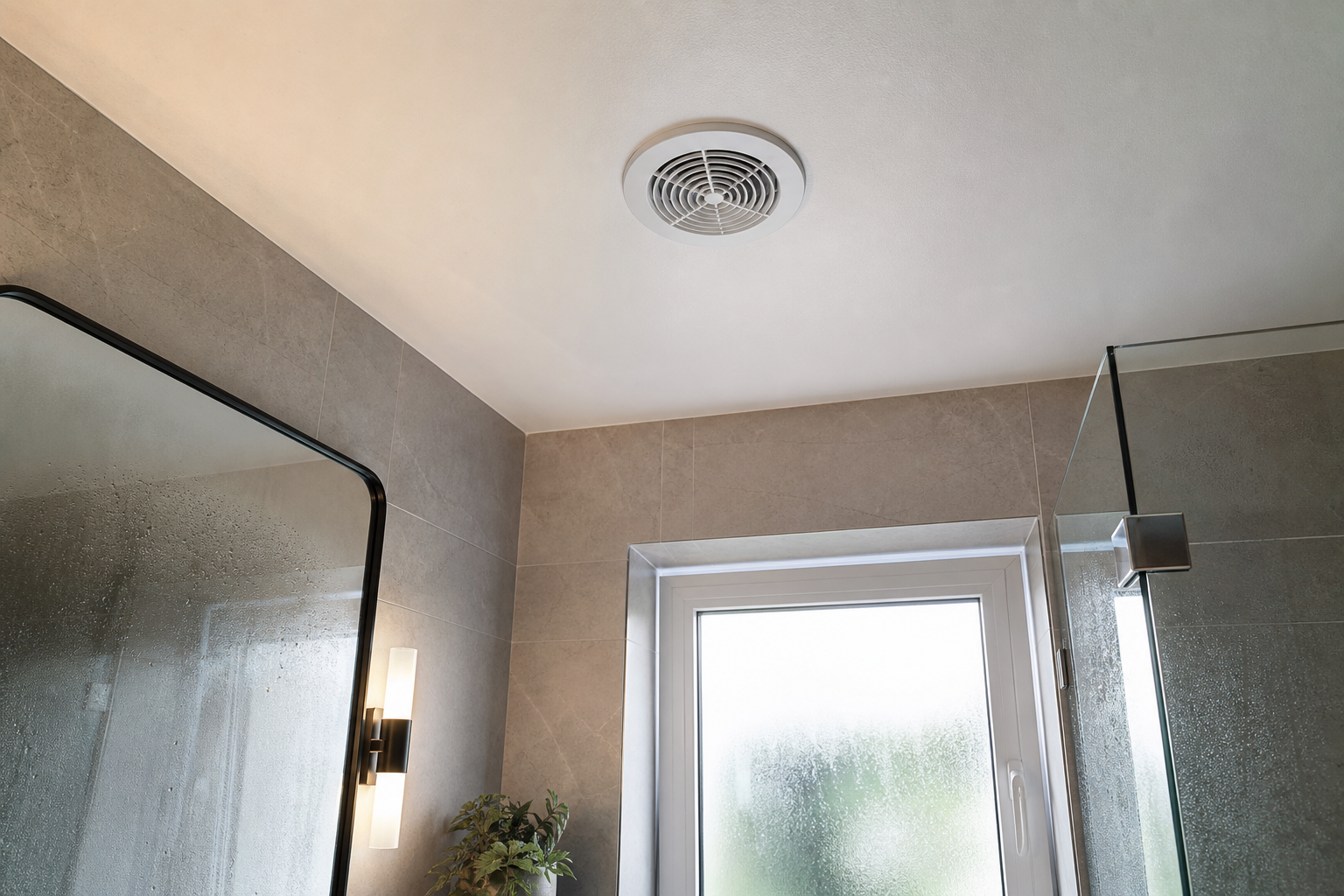
How to Stop Bathroom Extractor Fan Backdraft
If you feel cold air, smells, or damp air coming back through a bathroom fan grille when the fan is off, that is usually a bathroom extr...

How to Reduce Humidity in a Bedroom
If you want to reduce humidity in a bedroom, start by finding the cause: overnight moisture from people, poor ventilation, cold surfaces...

Why Does Bedroom Window Condensation Form Overnight?
Bedroom window condensation forms when moist indoor air touches a window surface that has cooled below the air’s dew point. Bedrooms are...