
Knowledge hub
Supply vs Extract Ventilation: How They Work Together

Supply vs extract ventilation is not really a contest between two separate ideas. In practice, supply ventilation brings outdoor air into the home, extract ventilation removes stale indoor air, and many homes work best when both are planned together as a balanced system.
The right setup depends on the building, airtightness, room layout, climate, and local rules. A supply-only or extract-only system can be suitable in some homes, but balanced ventilation is usually the clearest way to control airflow paths and indoor pressure.
Quick Answer
Supply ventilation pushes fresh outdoor air in. Extract ventilation pulls stale, moist, or polluted air out. Balanced ventilation uses both at roughly equal airflow rates so the home does not become strongly pressurised or depressurised.
That balance matters because air will always try to enter and leave through the easiest path. If the system is not designed and commissioned well, you can get unwanted leakage, comfort problems, or weaker real-world performance than the unit name suggests.
Table of Contents
- What is the difference between supply and extract ventilation?
- How air moves through a home in practice
- When supply ventilation is used alone
- When extract ventilation is used alone
- How balanced ventilation combines both
- Advantages, limitations, and common misunderstandings
- Practical example for a typical home
- Common mistake to avoid
- HavenPoint expert tip
- FAQ
- Conclusion
What is the difference between supply and extract ventilation?
The functional difference is simple. Supply ventilation introduces fresh air from outside, while extract ventilation removes indoor air from the building. The terms describe direction, not quality: both can be part of a good system when they are used in the right places.
European guidance describes unidirectional systems as either supply or exhaust only, while balanced systems supply and remove air in roughly equal amounts. That is why “balanced ventilation” is often the more useful concept when you want to understand how the whole home actually behaves.
| System type | What it does | Typical result |
|---|---|---|
| Supply ventilation | Brings outdoor air into the home | Fresh air enters; stale air leaves through leakage or transfer paths |
| Extract ventilation | Removes indoor air from the home | Air is drawn out of wet or pollutant-prone rooms; replacement air enters elsewhere |
| Balanced ventilation | Supplies and extracts similar air volumes | More stable pressure and more predictable airflow paths |
How air moves through a home in practice
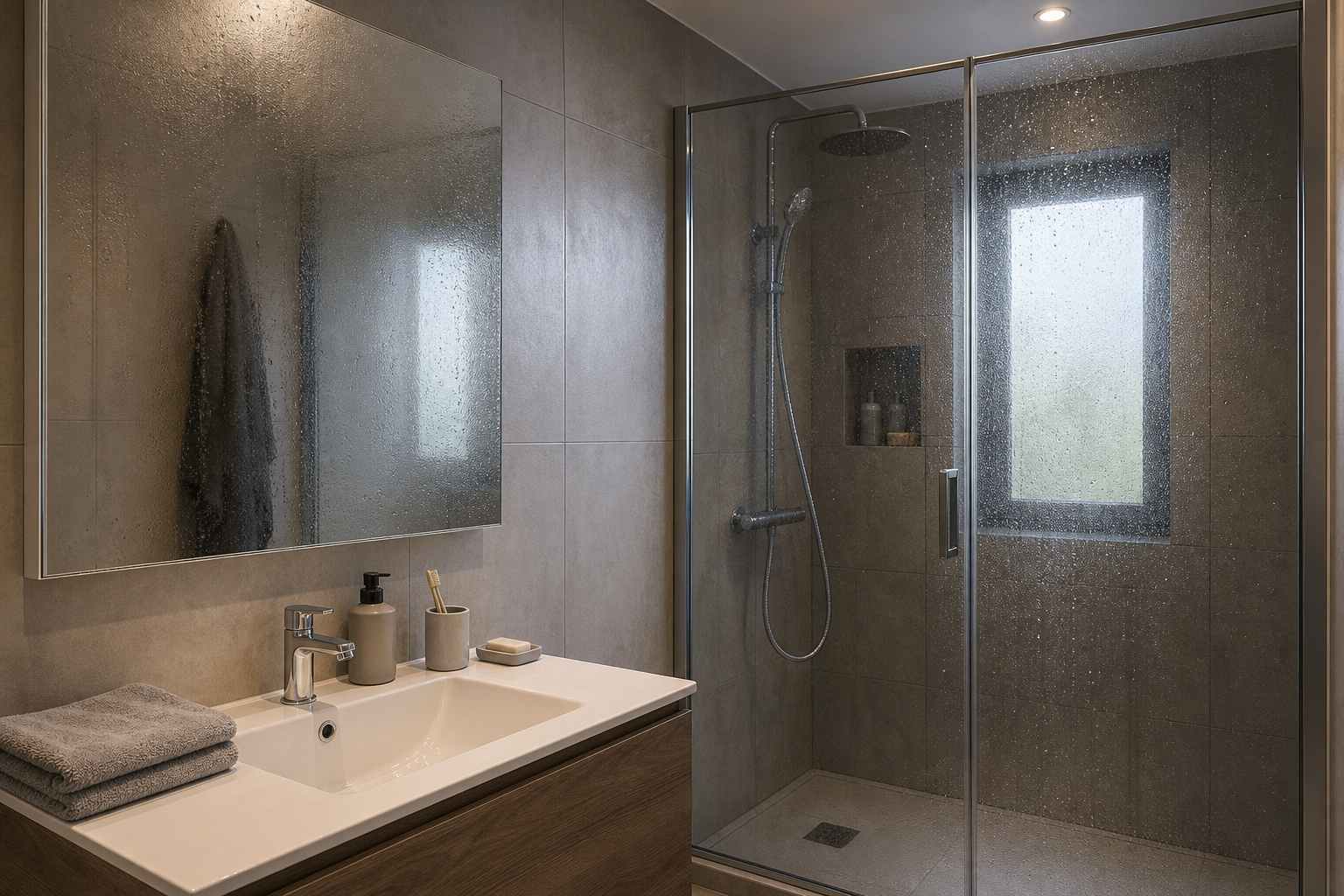

Airflow is usually designed to move from cleaner rooms toward dirtier or wetter rooms. In a typical home, supply air is often introduced to living rooms and bedrooms, while extract air is taken from bathrooms, toilets, kitchens, and utility spaces.
This creates a deliberate path for fresh air and stale air. The home then behaves less like a collection of separate rooms and more like one connected pressure system. That is why duct layout, door transfer paths, and airtightness all matter.
If the pressure balance is poor, the air may not travel where you expect. Air can leak through the building envelope, short-circuit between nearby openings, or fail to reach the rooms where it was meant to help.
When supply ventilation is used alone
Supply-only systems are sometimes used when a simple way to bring outdoor air into a home is needed. They can be suitable where slight pressurisation is acceptable and the building design supports predictable paths for the air to leave.
In such systems, replacement air must still get out somehow, so the building relies more on leakage, transfer openings, or other planned outlets. That can work, but it makes performance more dependent on the building envelope and room layout than a balanced system does.
A supply-only approach is not automatically wrong. It is simply more sensitive to how the house is built and how the air is allowed to exit.
When extract ventilation is used alone
Extract-only systems are common where the main priority is removing moist or polluted air from specific rooms. Bathrooms and kitchens are the most obvious examples because they generate humidity, odours, and other contaminants.
The downside is that the fresh replacement air has to come from somewhere else. In many homes, that means leakage through the envelope or planned inlet paths. If the home is fairly airtight, the system may not behave as predictably as intended unless the whole ventilation path has been considered.
This is why extract-only systems can be acceptable in simpler homes, but they are not the same as a fully managed whole-house ventilation strategy.
How balanced ventilation combines both
Balanced ventilation uses both supply and extract fans or air paths so the amount of air brought in is approximately equal to the amount removed. The aim is not just “two fans”, but a controlled pressure regime with clear airflow routes through the building.
This is the approach most often associated with heat recovery ventilation. Heat recovery can transfer heat from outgoing air to incoming air while keeping the air streams separate, which can reduce heating losses. But not every balanced system includes heat recovery, so the two ideas should not be treated as identical.
Balanced systems are especially useful in tighter homes, because they reduce the need to rely on uncontrolled leakage for make-up air. They also make commissioning more important: the supply and extract rates should be set and checked so the system performs as designed.
| Feature | Supply-only | Extract-only | Balanced |
|---|---|---|---|
| Main airflow direction | Outdoor air in | Indoor air out | Both in and out |
| Pressure behaviour | Tends toward positive pressure | Tends toward negative pressure | Designed to stay near balance |
| Dependence on leakage | Moderate to high | Moderate to high | Lower when properly designed |
| Heat recovery fit | Less typical | Less typical | Common, but not automatic |
Advantages, limitations, and common misunderstandings
One common misunderstanding is to treat supply ventilation and balanced ventilation as the same thing. They are not. Supply ventilation is one side of airflow control; balanced ventilation is a coordinated strategy that uses both supply and extract.
Another mistake is assuming extract fans alone guarantee good indoor air quality everywhere in the home. They can remove moisture and pollutants from target rooms, but that does not automatically mean the rest of the home gets the right airflow pattern.
Balanced systems offer the clearest control over pressure and airflow paths, but they are not automatically superior in every case. They need correct design, duct layout, balancing, and commissioning. A poorly set up balanced system can underperform just as a simpler system can.
EU product rules and labels may provide useful data such as heat recovery efficiency and fan-related performance fields, but the best choice is still system-wide. Ducts, room layout, fan setting, and installation quality all influence the final result.
Practical example for a typical home
Consider a typical airtight family home. Fresh air is supplied to the bedrooms and living room. Air then moves under doors and through transfer paths toward bathrooms, toilets, and the kitchen, where it is extracted.
In this setup, the home has a clear air direction: cleaner rooms first, wetter or more polluted rooms last. If the supply and extract rates are close to equal, the home stays near pressure balance and the system is easier to predict.
If the same home relied only on extract fans in wet rooms, replacement air would come in through leakage or inlet points. That may still work, but the actual airflow path would be less controlled and more sensitive to airtightness than a balanced setup.
Common mistake to avoid
Do not judge a ventilation system by the fan or unit alone. The whole system matters: air balance, duct routing, room placement, commissioning, and the building envelope all influence how well it works.
Also avoid assuming that one country’s room-by-room ventilation rules apply across the EU. Local codes, installation practice, and certification schemes vary, so the correct design should always be checked locally.
HavenPoint expert tip
If you are comparing ventilation options, start with the airflow path rather than the product brochure. Ask: where does fresh air enter, where does stale air leave, and how is the pressure balance controlled? Those three questions usually reveal more than a long list of features.
That approach also makes it easier to see whether heat recovery would genuinely help your home, or whether a simpler extract or supply solution is more realistic for the building.
FAQ
Is balanced ventilation always better than supply or extract ventilation?
Not always. Balanced ventilation is usually the most controlled option, but it also needs better design and commissioning. In some homes, a simpler supply-only or extract-only approach can be sufficient if the building and use case suit it.
Does balanced ventilation always include heat recovery?
No. Heat recovery is common in balanced systems, but it is not mandatory in every case. The two ideas are related, but they are not the same thing.
Why does pressure balance matter?
If the home is strongly pressurised or depressurised, air may be pulled through unintended gaps in the envelope. That can affect comfort, moisture behaviour, and overall system performance.
Can extract ventilation work in an airtight home?
It can, but it becomes more dependent on planned air inlets and the real leakage paths in the building. The tighter the home, the more important it is to understand where replacement air will come from.
What should I check before choosing a system?
Check the intended airflow path, the airtightness of the home, the room layout, noise considerations, and whether heat recovery would be useful. Also confirm the relevant local rules, because requirements vary across Europe.
Conclusion
Supply vs extract ventilation is best understood as a question of airflow direction and control. Supply brings fresh air in, extract removes stale air, and balanced ventilation combines both to manage pressure and air movement more predictably.
For many homes, the key decision is not simply which fan type to buy. It is how the whole system will move air through the building, how pressure will stay balanced, and whether the chosen setup fits the home’s construction and use.
If you want help reviewing your ventilation setup or choosing the right approach for your home, contact HavenPoint for guidance before you buy or install anything.