Blog
Can a Ventilation System Cool a House Without Air Conditioning?

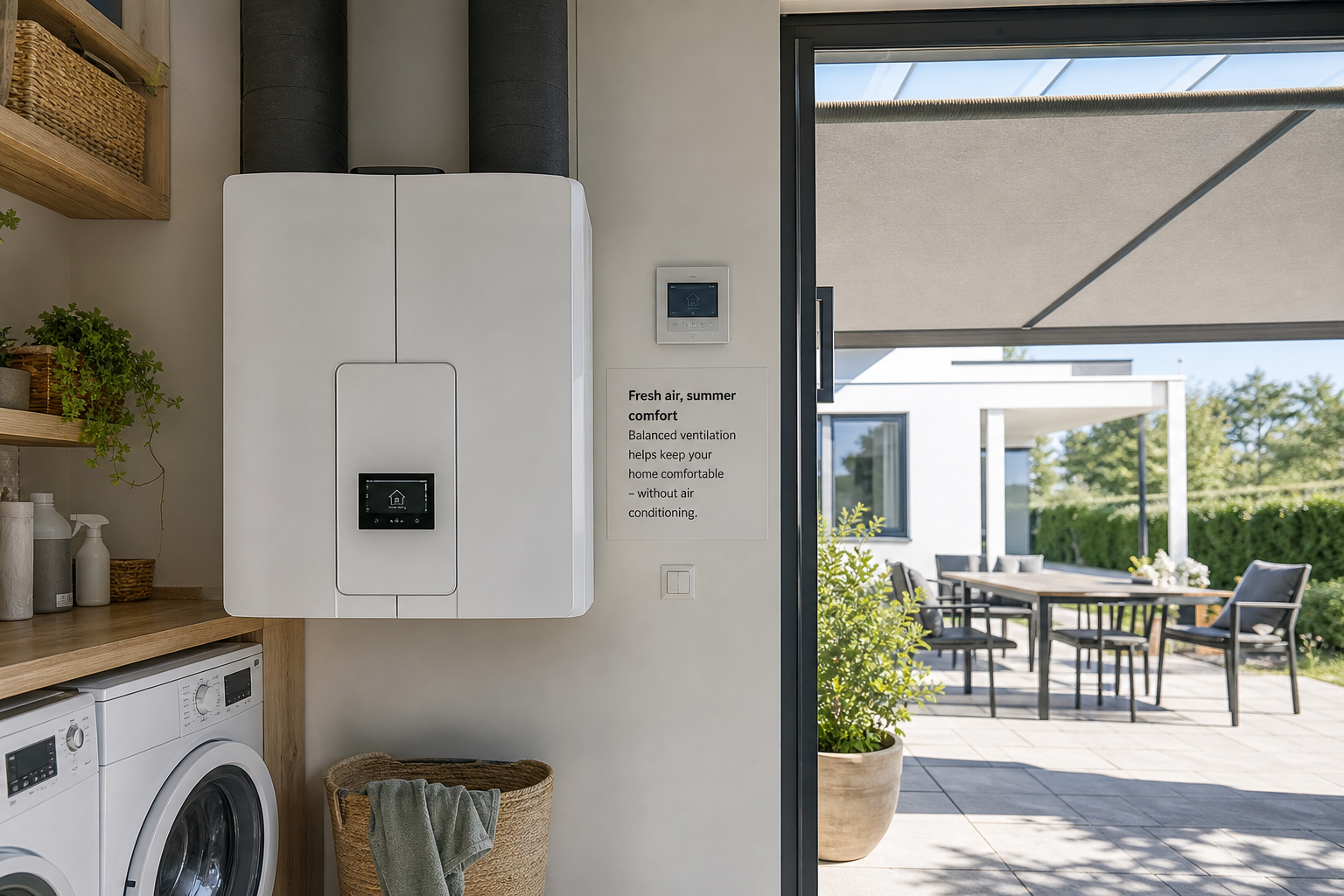
Yes, ventilation can sometimes make a house feel cooler and reduce indoor temperature, but only when it helps remove heat from the building. It is not the same as air conditioning. If you are asking can a ventilation system cool a house without air conditioning, the answer is: sometimes, within limits, and mainly when outdoor air is cooler than indoor air or when the house can release stored heat at night.
Quick answer: ventilation can improve summer comfort, but it cannot reliably replace AC in hot weather. It works best with shading, low solar gains, night purge ventilation, and moderate internal heat loads. If those conditions are missing, ventilation may refresh the air without meaningfully cooling the home.
Table of contents
- Why ventilation feels cooler but does not always lower temperature
- When ventilation can help in summer
- When ventilation cannot replace air conditioning
- Comparison of ventilation types and summer performance
- Practical real-world example
- Common mistake
- HavenPoint expert tip
- FAQ
- Conclusion
Why ventilation feels cooler but does not always lower temperature
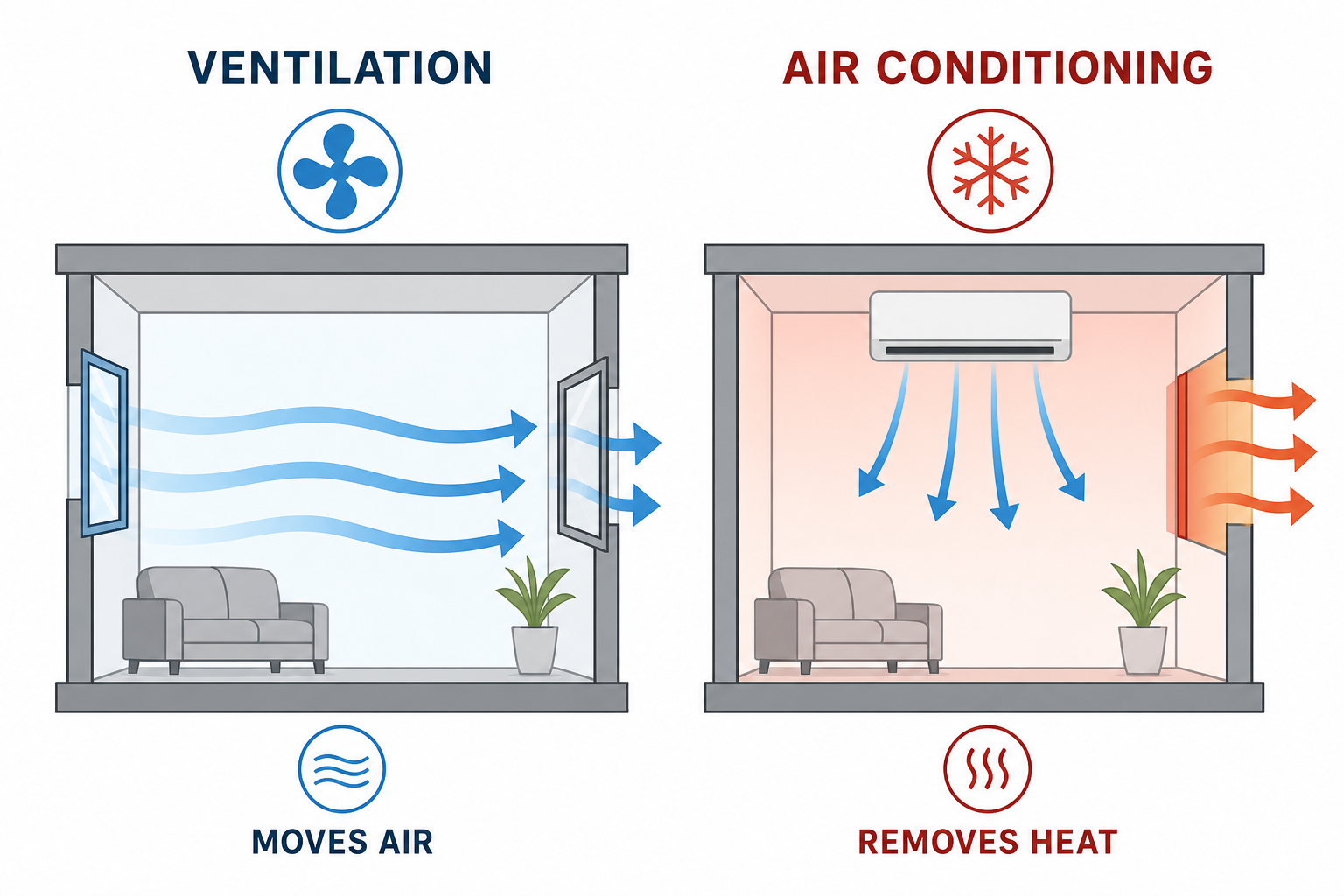
Ventilation moves air. Air conditioning removes heat. That difference matters. Ventilation can help comfort in summer by carrying heat away from people and by flushing stored heat out of the building, but airflow by itself does not guarantee a lower room temperature.
A room may feel better simply because air movement reduces stuffiness and improves how the body loses heat. But if the incoming air is warm, ventilation may only change how the room feels, not the measured temperature. If outside air is hotter than indoors, ventilation can even add heat.
| What ventilation can do | What it cannot do |
|---|---|
| Remove heat when outdoor air is cooler | Create refrigeration-style cooling |
| Help flush stored heat from the building | Overcome strong solar gains on its own |
| Improve perceived comfort through air movement | Guarantee safe summer temperatures in every home |
| Support air quality and moisture control | Replace active cooling during heatwaves |
When ventilation can help in summer
Ventilation can help when it is part of a wider overheating strategy. European guidance consistently points to shading, thermal mass, night ventilation, and low internal heat gains as important ways to limit overheating. Ventilation supports those measures by moving heat out of the building when conditions allow.
Ventilation is most useful when these conditions apply:
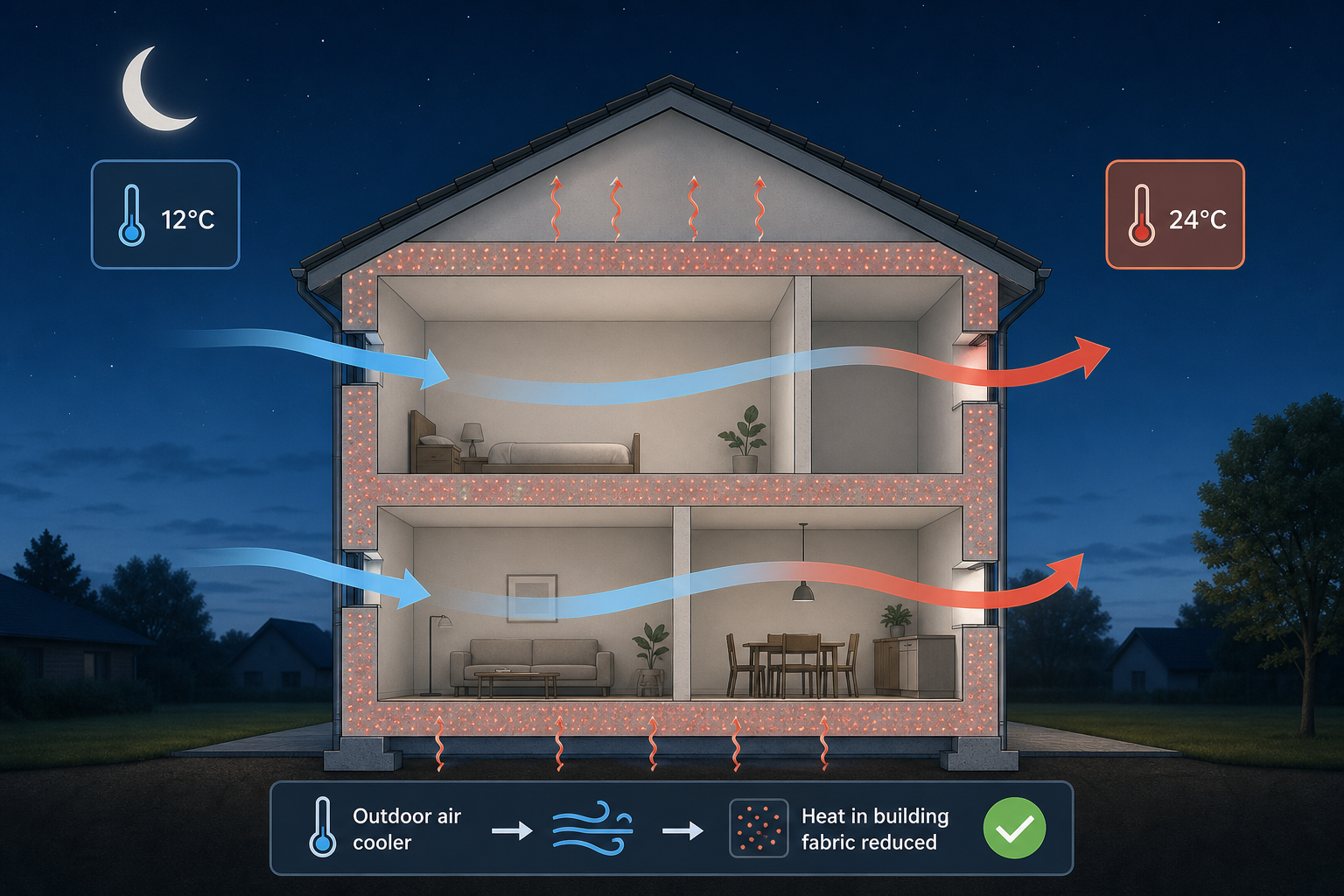
- outdoor air is cooler than indoor air, especially in the evening or at night;
- the house can be flushed with enough air to remove stored heat;
- solar gains are limited by external shading or careful window use;
- appliance, lighting, and occupancy heat gains are moderate;
- the building can keep some of that night-time coolth into the next day.
That is why can ventilation lower indoor temperature is a conditional question. The answer depends on weather, building design, and how the system is used. In the right conditions, ventilation can reduce overheating risk and improve comfort. In the wrong conditions, it may do little more than move air.
Natural ventilation and night purge
Night ventilation can be effective when the night air is cooler than the building. Opening windows or using a designed night purge strategy lets the structure release stored heat. This is often one of the most practical ways of cooling a house without AC, but it depends on local climate, security, noise, pollen, and outdoor air quality.
Balanced mechanical ventilation
Balanced systems provide controlled supply and extract airflow. In summer, that can help maintain air exchange and support night flushing when the building and controls are set up for it. But the comfort benefit comes from actual heat removal and air movement, not from balanced airflow alone. A balanced ventilation system is still ventilation, not active cooling.
When ventilation cannot replace air conditioning
Ventilation alone usually falls short when the house gains heat faster than the system can remove it. This is common in homes with large west-facing glazing, weak external shading, top-floor exposure, or high internal loads from cooking and appliances. In those cases, ventilation may improve comfort but will not reliably hold temperatures down.
Ventilation cannot replace AC when:
- outdoor temperatures stay high day and night;
- humidity is high enough that outdoor air feels uncomfortable;
- solar gains through windows are significant;
- the building stores heat faster than it can be purged;
- occupants need a stable indoor temperature, not just fresher air.
European policy and Passive House guidance treat passive ventilation as part of a broader overheating strategy, not as a universal substitute for active cooling. If a home regularly overheats, the right answer may be better shading, a better summer ventilation strategy, or dedicated cooling.
Comparison of ventilation types and summer performance
Different systems behave differently in summer. The best choice depends on whether your main goal is fresh air, comfort, overheating reduction, or actual cooling.
| System type | Summer role | Typical limitation |
|---|---|---|
| Natural ventilation | Can remove heat when outdoor air is cooler, especially at night | Depends on weather, noise, security, and air quality |
| Supply or exhaust ventilation | Supports air exchange and can help comfort when it removes heat | May not address solar gain or stored heat well enough |
| Balanced ventilation | Can support controlled air exchange and summer flushing when conditions are suitable | Does not itself create cooling |
| Heat recovery ventilation (HRV/MVHR) | Useful for winter efficiency; summer bypass avoids unwanted heat recovery | Bypass is not air conditioning |
| Ventilation with auxiliary cooling | Can provide real cooling when a cooling module is added | Cooling comes from the added technology, not ventilation alone |
For homeowners, the key distinction is simple: a ventilation unit may help with summer comfort, but only a system with an actual cooling stage can deliver true mechanical cooling. That distinction matters when reading product brochures, because some marketing language uses “cooling” loosely.
Heat recovery ventilation in summer is especially worth understanding. The European Commission defines heat recovery as transfer from exhaust air to supply air, which is useful in the heating season. In summer, that same transfer can be undesirable, so many MVHR units use a bypass. The bypass prevents heat recovery, but it does not chill the air.
Practical real-world example
A well-insulated, airtight house with external shading, moderate window area, and limited appliance gains may stay comfortable through much of the summer with balanced ventilation and night purge ventilation. In that case, the ventilation strategy helps remove stored heat after sunset and keeps indoor air fresh during the day.
Now compare that with a top-floor flat with large west-facing glazing and no external shading. Even if it has mechanical ventilation, afternoon solar gains can exceed what the ventilation system can remove. The residents may still need shading upgrades, window control, or a dedicated cooling solution.
This is the most useful way to think about the question: cooling a house without AC is possible in some homes, but only if the building and climate support passive heat removal.
Common mistake
The most common mistake is assuming that MVHR or balanced ventilation is a substitute for air conditioning. Summer bypass can improve operation in warm weather, but it does not create cooling. Another common mistake is focusing on the ventilation unit while ignoring external shading, which often has a larger impact on overheating than airflow alone.
HavenPoint expert tip
If summer overheating is a concern, assess the whole building first: glazing, orientation, shading, airtightness, thermal mass, internal heat gains, and local climate. Then choose the ventilation strategy. That sequence usually leads to a better result than selecting a “cooling” ventilation unit before the building problem is understood.
For many homes, the best answer is a combination of measures: shading, controlled night ventilation, and a balanced ventilation system configured correctly for summer use. For homes that overheat regularly, add dedicated cooling rather than expecting ventilation alone to do everything.
FAQ
Can ventilation lower indoor temperature?
Yes, but only when the incoming air is cooler than the indoor air or when ventilation helps remove stored heat faster than the building gains it. If outside air is hot, ventilation may not lower temperature at all.
Does heat recovery ventilation cool a house in summer?
No. Heat recovery ventilation is mainly for heat recovery and fresh air supply. Summer bypass can stop the unit from warming incoming air, but that is not the same as cooling.
What is the best ventilation strategy for summer comfort?
Usually a combination of external shading, night ventilation or night purge, and a balanced ventilation system that is configured correctly for summer. The best option depends on the building and local climate.
Can a ventilation system replace air conditioning?
Sometimes in mild conditions, but not reliably in hot weather or in homes with strong overheating drivers. If your indoor temperature regularly becomes uncomfortable, ventilation alone is often not enough.
Why does my home feel better with ventilation even when it is still warm?
Moving air improves perceived comfort and can reduce stuffiness. That can make a room feel better even if the measured temperature changes only slightly.
When should I consider real cooling instead of ventilation only?
If overheating happens often, if night ventilation cannot remove enough heat, or if you need stable daytime temperatures during heatwaves, dedicated cooling should be considered alongside ventilation.
Conclusion
So, can a ventilation system cool a house without air conditioning? Sometimes, but only within limits. Ventilation can improve comfort and reduce overheating risk when outdoor conditions are favourable. It cannot reliably replace AC when solar gains, internal heat loads, or hot outdoor temperatures are too high.
If you are planning a new system or trying to solve summer overheating, start with the building itself. Shading, summer strategy, and the right ventilation type matter more than marketing claims about “cooling” alone.
If you are unsure whether ventilation alone is enough for your home, contact HavenPoint for guidance on the most suitable indoor-climate solution.
References
- BUILD UP / Passipedia — Passipedia: Summer comfort guideline – How to ensure thermal comfort all year?
- Passive House Institute — Summer comfort with passive measures
- EUR-Lex / European Union — Commission Delegated Regulation (EU) 2022/759
- European Commission — Ventilation Units – European Commission
- European Environment Agency — Cooling buildings sustainably in Europe: exploring the links between climate change mitigation and adaptation, and their social impacts
- Passivhaus Institut — Criteria for Passive House buildings
- Passivhaus Institut — Handbook for energy-efficient building design in education buildings
- Publications Office of the European Union — Guidelines for ventilation requirements in buildings