Blog
Why Is My Bathroom Extractor Fan Not Removing Humidity?

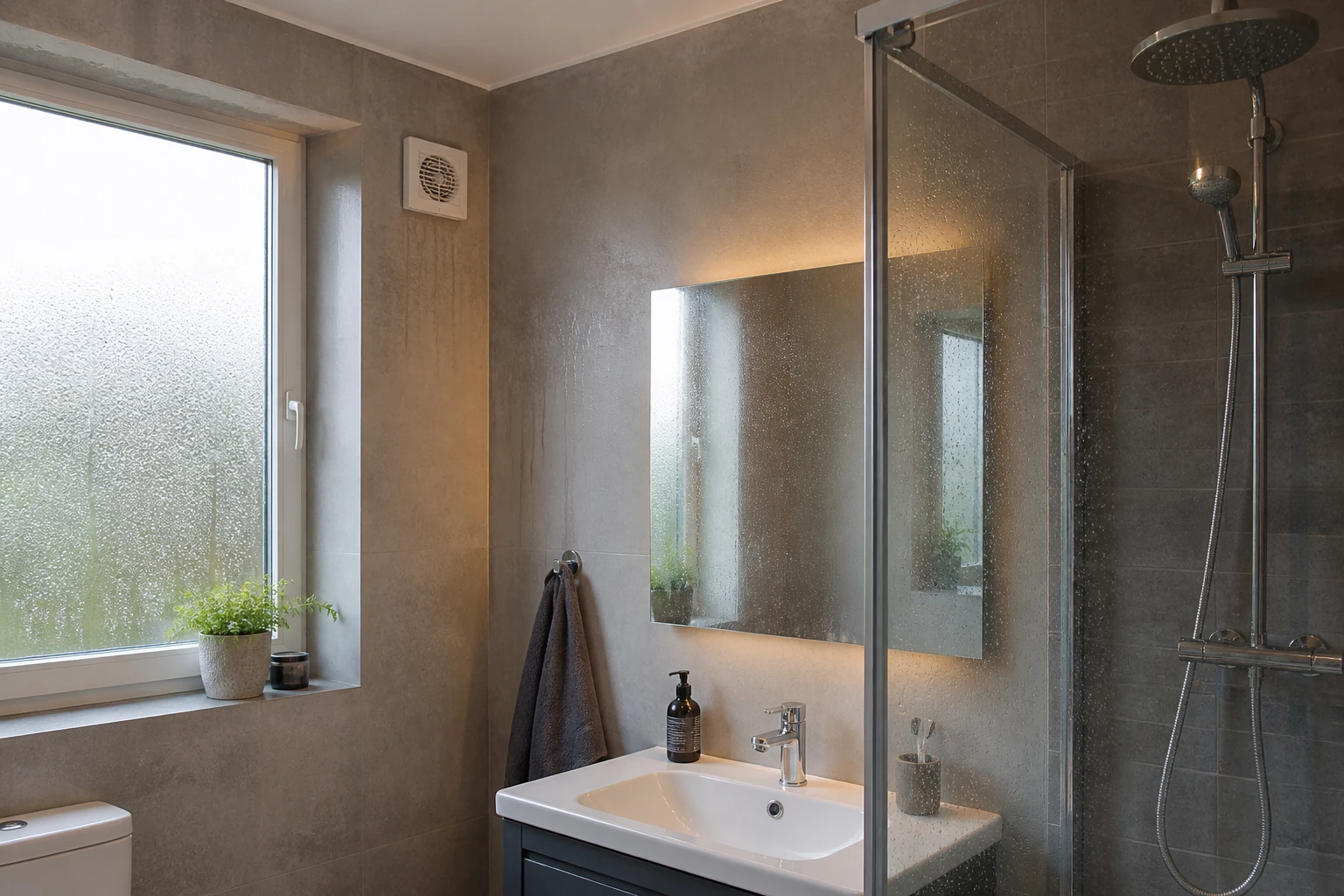
If your bathroom extractor fan not removing humidity is the problem, the usual causes are simple: the fan is undersized, it is not exhausting properly outdoors, the ducting is restrictive, the backdraft damper is not working, or the fan is dirty and running at reduced airflow. The key point is that an extractor lowers the room’s actual moisture load by exhausting moisture-laden indoor air outdoors. Relative humidity is the percentage at the current air temperature, not the quantity the fan directly removes, and adequate replacement air must be able to enter the room.
Quick answer
A bathroom fan can run and still fail to control moisture if it is moving too little air, discharging into a void or otherwise failing to exhaust outdoors, or switching off too early. Start by checking the grille, the run time, the outside vent, and whether fresh air can enter under the door. If those are fine, the next likely issues are duct losses, a stuck damper, or a fan that is simply not suitable for the room size and usage.
If the bathroom still fogs up quickly or condensation remains on mirrors and tiles long after a shower, the fan may be underperforming even if it sounds normal.
Table of contents
- How bathroom extractor fans are supposed to reduce humidity
- Signs the fan is underperforming
- Why bathroom extractor fans fail to remove humidity
- Safe checks a homeowner can do
- When cleaning, repair, or replacement is needed
- How to choose a better replacement or upgrade
- Common mistakes
- Practical example
- FAQ
- References
How bathroom extractor fans are supposed to reduce humidity
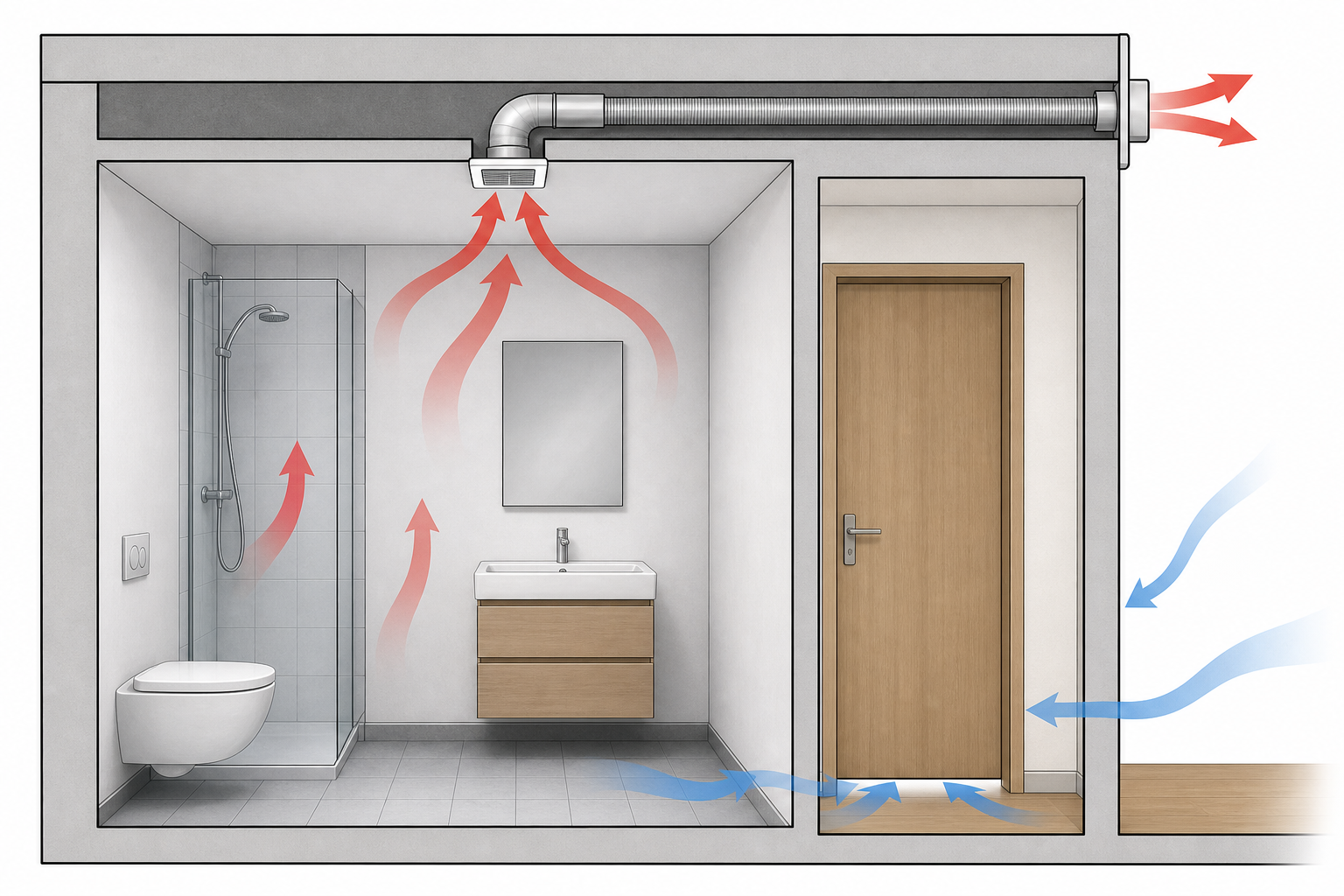
A bathroom extractor fan removes moisture by pulling moisture-laden indoor air out of the room and exhausting it outdoors. That only works well when adequate replacement air can enter through a suitably sized door undercut or designed transfer path. A visible gap alone does not prove that the opening can support the required airflow.
The practical goal is not just to switch the fan on, but to remove humid air during the shower and for a period afterward. Guidance from manufacturer and technical sources consistently points to running the fan after bathing as well, because moisture stays in the air and on surfaces once the shower stops.
| What the fan needs | Why it matters | What goes wrong if it is missing |
|---|---|---|
| Enough airflow | Moves humid air out fast enough | Moist air lingers and condenses |
| Outdoor exhaust | Removes moisture from the home | Humidity stays in the building or void |
| Replacement air | Lets the fan keep moving air | Airflow drops sharply |
| Run time after showering | Clears residual moisture | Mirror fog and damp surfaces persist |
Signs the fan is underperforming
A fan problem is often visible before it is measured. Common signs include a mirror that stays fogged, condensation on cold tiles or window glass, a musty smell, weak air movement at the grille, or moisture that returns quickly after the shower ends.
These signs do not prove one single fault. They tell you the bathroom ventilation system is not removing moisture effectively, which could be caused by airflow, ducting, control, or maintenance issues.
Why bathroom extractor fans fail to remove humidity
1. The fan is undersized for the room
Undersizing is one of the most common reasons for a bathroom humidity problem. If measured airflow at the installed extract terminal is too low for the room volume and use pattern, the fan may never catch up during a shower. A nominal product airflow rating is only a starting point because the installed duct and terminal resistance determine the airflow actually delivered. This is especially likely in bathrooms without windows or in rooms used by multiple people in sequence.
Technical guidance commonly uses room size and use pattern to guide selection, but exact requirements still depend on local rules, the duct route, and the installation quality. There is no single universal EU bathroom fan sizing rule that applies everywhere.
2. The ducting is restrictive or poorly installed
A fan may sound normal but still deliver weak real-world airflow if the duct run is long, has too many bends, or is partially blocked. Pressure losses reduce the amount of air the fan can actually expel. If the duct passes through a cold attic or similar unconditioned space, condensation inside the duct can also become part of the problem.
Manufacturer instructions also warn that duct slope, insulation, and condensate management matter. If humid air cools inside the duct, water can collect and restrict performance further.
3. The fan is not exhausting outdoors properly
If the fan discharges into a void, attic, or other non-exhaust space, it does not solve the humidity problem. It may just move moisture somewhere else in the building envelope, where it can later condense, smell musty, or damage materials. Proper outdoor discharge is essential.
4. The backdraft damper is stuck or missing
A backdraft damper should prevent reverse airflow when the fan is off. If it is stuck closed, it can choke the fan. If it is missing or not functioning, outside air may flow backward through the system when conditions change, reducing comfort and performance.
5. The grille, housing, or duct is dirty
Dust buildup can reduce airflow over time. A visibly dusty grille does not always mean the motor is failing, but it is a legitimate first-line issue to correct. Cleaning often restores part of the lost performance, especially in fans that have not been maintained regularly.
6. The fan is running too little or at the wrong time
Bathroom ventilation only works if it is used long enough. If the fan starts after the bathroom is already saturated and then switches off too soon, humidity will still linger. Timer controls and humidity-sensing controls can help where the main issue is user behavior, not hardware failure.
7. There is not enough replacement air
A fan cannot exhaust much air if the bathroom is sealed too tightly. Without adequate make-up air, the pressure balance limits airflow. A door undercut or designed transfer path must be sufficient for the installed airflow; an unspecified small gap is not automatically enough.
Step-by-step checks a homeowner can safely do
These checks help separate a simple bathroom fan maintenance issue from a deeper ventilation problem.
- Check the grille and cover. Remove visible dust and lint.
- Listen and feel. The fan should produce steady airflow at the grille.
- Check the run time. Make sure it runs during the shower and afterward.
- Look at the exterior vent. Confirm the air is actually leaving outdoors.
- Check for a sealed bathroom. Confirm that the door undercut or designed transfer path provides adequate make-up air; a visible gap alone does not confirm sufficient airflow.
- Watch for condensation patterns. Persistent mirror fog or damp corners suggest weak removal, not just temporary steam.
Do not open electrical wiring or dismantle a hardwired unit unless you are qualified and local rules allow it. Fan replacement, hidden duct inspection, and any electrical troubleshooting beyond basic observation are usually better handled by a professional.
Common causes, what you can observe, and the likely next step
| Observation | Likely cause | Best next step |
|---|---|---|
| Mirror stays fogged for a long time | Low airflow, short run time, or blocked duct | Clean, extend run time, inspect exhaust path |
| Fan sounds normal but room still feels damp | Restriction in ducting or undersized fan | Check duct route and fan suitability |
| Air seems weak at the grille | Dust, stuck damper, or pressure loss | Clean grille and inspect damper/exhaust |
| Humidity improves only with the door open | Not enough replacement air | Check whether the transfer opening provides adequate make-up air |
| Condensation appears inside duct or near fan body | Cold ducting or poor insulation | Inspect insulation and condensate control |
HavenPoint Expert Tip
If the fan seems weak, test the whole path, not just the motor. A clean grille with a blocked duct can perform almost as badly as a failed fan. In practice, humidity removal depends on the complete system: room air entry, fan capacity, duct resistance, damper operation, and outdoor discharge.
Common mistake that makes the problem worse
The most common mistake is assuming a louder fan is a better fan. Noise does not guarantee effective humidity removal. Another frequent error is cleaning the visible grille and stopping there, while the real restriction is in the duct, damper, or external hood.
When cleaning, repair, or replacement is needed
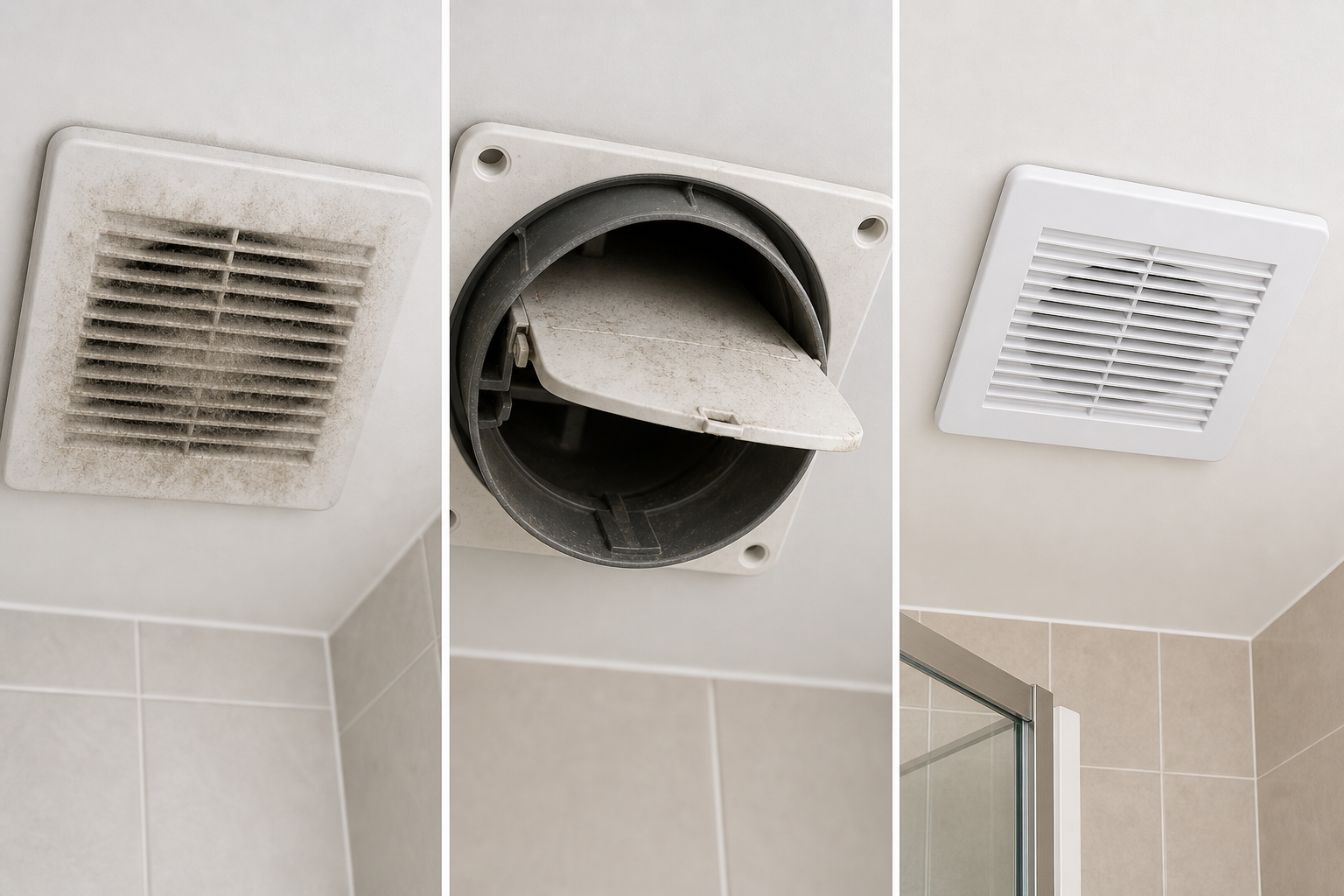
Cleaning is worth trying first when the fan is dusty, lightly clogged, or simply overdue for maintenance. Repair becomes more relevant if a damper, control, or connection issue is found and the unit is otherwise suitable. Replacement is often the better choice when the fan is old, noisy, weak, badly installed, or clearly undersized for the bathroom.
If the fan is connected to a poor duct route or the room needs a different control strategy, replacement may solve more than one problem at once. In bathrooms where people forget to switch the fan on, a humidity-controlled model or a timer-controlled model can be a practical upgrade.
How to choose the right replacement or upgrade
If replacement is the sensible path, choose based on the problem you are actually solving. A higher-capacity fan can help if the current unit is undersized, but it will not fix blocked ducting or a discharge that does not go outdoors. Likewise, a humidity-sensing fan helps most when the main issue is delayed activation or forgotten use.
| Upgrade type | Best for | Limitations |
|---|---|---|
| Standard replacement fan | Worn-out or noisy fan with similar ventilation needs | Does not solve user behavior or duct problems by itself |
| Higher-capacity fan | Undersized bathroom or persistent humidity | May still underperform if ducting is restrictive |
| Humidity-controlled fan | Users forget to run the fan or switch it off too early | Sensor location and setup matter |
| Fan with better backdraft control | Reverse airflow or draught complaints | Does not fix poor exhaust routing |
| Insulated ducting or condensate management | Ducts through cold spaces | Needs correct installation, not just new parts |
Before buying, verify that the fan suits the room layout and the installation path. National rules also vary across the EU, so check local ventilation and electrical requirements before replacing a fixed bathroom fan.
Practical example from a typical bathroom
A homeowner notices that the mirror fogs during every shower and condensation stays on the tiles. The fan runs, but only for a few minutes after use. The grille is dusty, the bathroom door seals tightly, and the duct passes through a cold loft. In that case, the problem is probably not one single fault. Cleaning, longer run time, improved make-up air, and checking the duct route are all part of the fix. If the fan is still weak after those checks, replacement may be more practical than repair.
Bathroom ventilation troubleshooting checklist
- Is the fan exhausting outdoors?
- Is the replacement-air path adequate for the fan’s actual installed airflow?
- Is the grille or housing dusty?
- Does the fan run long enough after bathing?
- Is the duct long, bent, insulated, or cold?
- Is the damper opening and closing correctly?
- Is the fan sized for the room and usage?
FAQ
Why is my bathroom extractor fan not removing humidity even though it is running?
The most likely reasons are low airflow, a blocked or restrictive duct, a stuck damper, or not enough replacement air entering the bathroom. A fan can run normally and still move too little air to clear moisture effectively.
How long should a bathroom extractor fan run after a shower?
Manufacturer and technical guidance commonly recommends running it during bathing and for a period afterward, often around 20 minutes. Local guidance may differ, so treat that as practical advice rather than a universal legal rule.
Can cleaning fix a bathroom humidity problem?
Yes, if dust or lint is reducing airflow. Cleaning the grille and visible parts is a sensible first step, but it will not fix undersizing, bad ducting, or a discharge that does not go outdoors.
Do I need a professional if the fan is weak?
Usually yes if the problem may involve wiring, duct routing, concealed blockage, or fan replacement. Homeowners can safely check the grille, run time, outdoor vent, and door undercut, but electrical work and hidden duct issues should be handled by a qualified person.
Is a humidity-sensing fan worth it?
It can be a good upgrade when the main issue is forgotten activation or switching the fan off too early. It will still need correct sizing and installation to work well.
What if condensation keeps coming back after I replace the fan?
Then the cause may be broader than the fan itself, such as poor insulation, cold surfaces, or high overall indoor humidity. A full bathroom ventilation review is then more useful than simply fitting a bigger fan.
Conclusion
If your bathroom extractor fan not removing humidity problem persists, start with the basics: clean it, confirm it exhausts outdoors, check for replacement air, and let it run long enough after showers. If the room still stays damp, the fan may be undersized, ducted poorly, or controlled in a way that does not suit the bathroom. In those cases, the right fix is often a better ventilation solution rather than a simple repair.
If your bathroom extractor fan still does not reduce humidity after basic checks, review the right ventilation solution for your room size and usage needs.