


Air Conditioning Condensate Pump Installation Guide

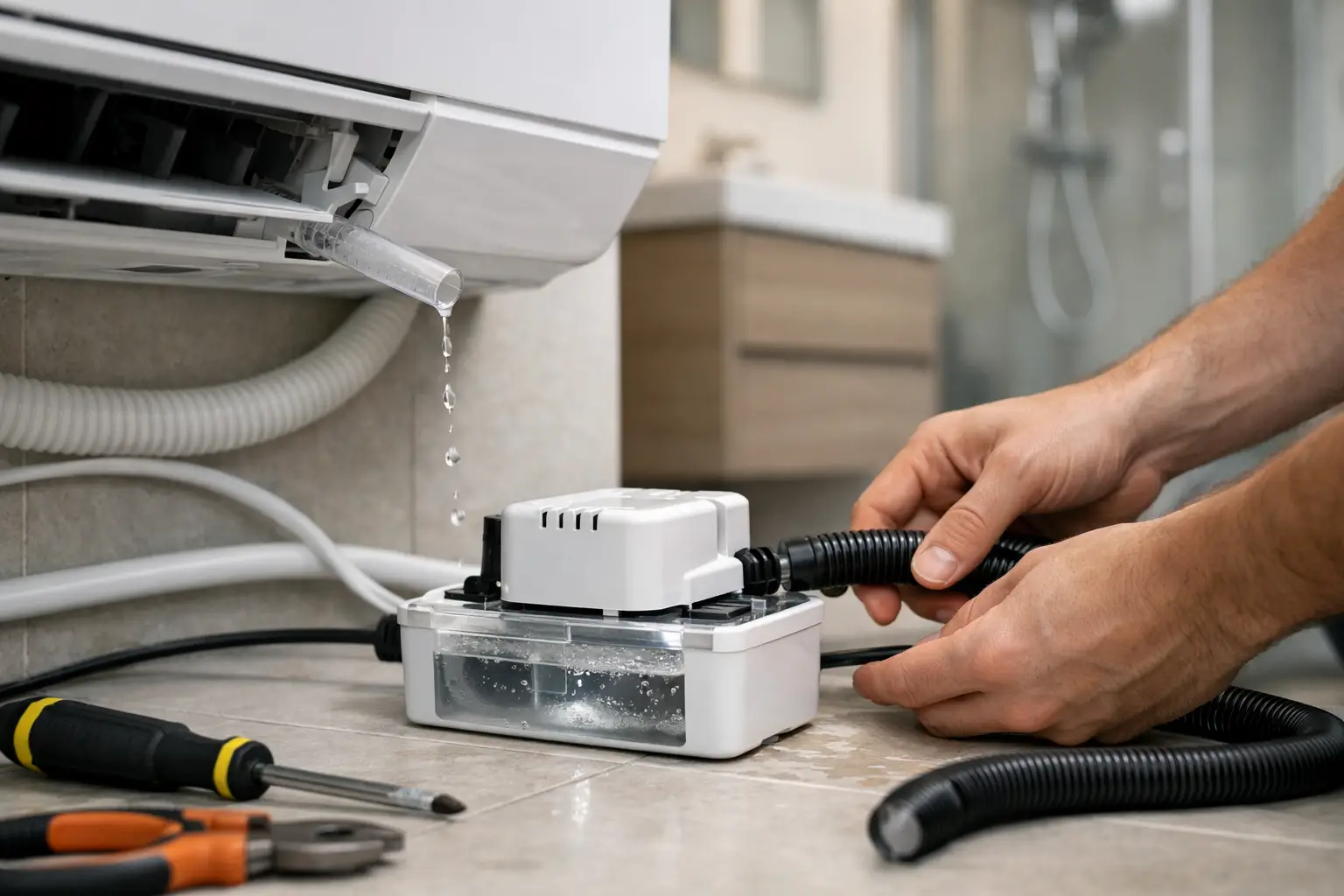
A wall-mounted split unit can cool perfectly yet still cause ceiling stains, nuisance alarms or water on the floor if its drainage route is wrong. Air conditioning condensate pump installation is required where gravity drainage from the indoor unit cannot maintain a continuous downward fall to a suitable waste connection. The pump is a small component, but its location, pipework and commissioning determine whether it remains quiet and dependable.
First decide whether a condensate pump is necessary
Condensate forms as warm, humid indoor air passes over the cold evaporator coil. It collects in the unit’s drain tray and normally leaves through a condensate line. Gravity drainage is preferable where it is practical: it has no motor, no float switch and fewer parts to maintain.
A pump becomes appropriate when the indoor unit is below the available drain point, when the pipe must pass above a doorway or suspended ceiling obstruction, or when the planned route cannot retain a reliable downward gradient. Typical applications include internal rooms, basement spaces, retail fit-outs and refurbishments where a visible gravity run is not acceptable.
Do not select a pump simply because the pipe route is inconvenient. First check whether the manufacturer permits the proposed drain arrangement and identify the actual vertical lift and total discharge run. A pump’s quoted maximum head is not the same as its practical operating point. Capacity falls as lift increases, and bends, restrictions and long pipe runs add resistance.
Select the right pump for the unit and route
The correct pump must handle the maximum condensate production of the air-conditioning unit at the required duty point. This information should come from the indoor unit documentation and the pump performance curve, rather than an estimate based only on room size. High latent loads, long cooling periods and humid weather can produce more condensate than expected.
Match pump type to the installation space
Mini pumps are commonly used with high-wall split units because they can fit inside a trunking system, behind the indoor unit or within a ceiling void. They usually use a separate reservoir or detection module near the drain tray and a remote pump body placed where it can be accessed.
Tank pumps are generally better suited to floor-standing units, ceiling voids, fan coil units or installations where there is enough service space. Their integrated reservoir can simplify the layout, but it must remain accessible for cleaning and replacement. For a cassette unit or concealed ducted system, purpose-designed pumps and drainage accessories may be needed to suit the available void depth and service arrangement.
The physical dimensions matter as much as the performance data. Check the available clearance, orientation limits, inlet and outlet sizes, maximum permissible water temperature, electrical supply requirements and stated sound level. A pump placed directly against lightweight plasterboard or metal trunking can transmit vibration even if its airborne noise rating is low.
Plan the discharge line before fitting anything
Measure the lift from the pump outlet to the highest point of the route, then measure the horizontal distance after that rise. Keep the discharge pipe size and material within the pump manufacturer’s instructions. Reducing the bore, kinking flexible tubing or introducing unnecessary elbows increases back pressure and can shorten pump life.
The pipework after the highest point should fall continuously towards the drain. Support it at regular intervals so it cannot sag and form a water pocket. A trapped section can create gurgling, slow drainage and repeated pump cycling. Where pipework passes through a wall, protect it with a sleeve and seal the penetration against weather and insects without crushing the tube.
A condensate discharge must terminate at a suitable, legally compliant drainage point. Do not run it onto a footpath, roof surface or external wall where water can stain finishes, freeze or create a slip hazard. Connection to a foul or soil drainage system may require a suitable trap or siphon arrangement to prevent odours entering the system. The appropriate arrangement depends on the local drainage design and whether the connection is open or sealed.
Air conditioning condensate pump installation steps
Before installation, isolate the electrical supply and read both the indoor unit and pump instructions. The sequence below provides a practical framework, but the manufacturer’s wiring diagram, lift limits and commissioning procedure always take priority.
Position the sensor and pump body correctly
Fit the reservoir or float sensor level, close enough to the indoor unit drain outlet for condensate to enter without backing up. Keep the inlet tube short, correctly supported and free from high points that could trap air. Where the indoor unit drain connection is concealed, make the joint secure and inspectable before closing trunking or boxing-in.
Mount the pump body on a firm surface or on the supplied anti-vibration support. Avoid fixing it to the indoor unit casing unless the manufacturer specifically allows this. Leave enough room to remove the cover, clean the reservoir and inspect tubing connections. A pump hidden permanently behind a finished wall turns routine maintenance into an expensive repair.
Connect pipework without creating restrictions
Use clean, square-cut tubing and fully seat each connection. Secure joints using the method specified for the pump and tubing type. Flexible tube is useful around the unit, but long unsupported flexible runs are more likely to kink than rigid condensate pipe.
Route the discharge line so it rises only as far as necessary, then falls to the drain point. Keep it separate from hot pipework where possible, and insulate pipework where surface condensation could affect finishes. If the route crosses an unheated area, consider the risk of freezing and provide protection appropriate to the building and installation conditions.
Wire the power and safety alarm properly
Most condensate pumps require a permanent electrical supply and provide high-level safety contacts. These contacts should be connected so that an abnormal water level stops the air-conditioning system or produces the intended fault response. Leaving the alarm wires disconnected removes one of the main protections against overflow.
Electrical work should be completed by a competent person in accordance with the pump instructions and applicable wiring requirements. Confirm the supply voltage, protective device arrangement and whether the alarm contact is normally open or normally closed. Do not assume terminals are interchangeable between pumps or air-conditioning controls.
Commission the system with water, not assumptions
A completed installation should be tested before decorative covers are fitted. Pour clean water into the indoor unit drain tray or pump reservoir in the quantity and manner specified by the manufacturer. Confirm that the pump starts, empties the reservoir and stops correctly. Watch every joint, particularly the first connection from the indoor unit and the discharge connection at the pump.
Then test the safety circuit by raising the water level or using the manufacturer’s stated test method. The indoor unit should shut down or signal a fault as designed. Finally, check the entire discharge route for leaks, poor falls, vibration and unwanted noise.
If a newly installed pump runs continuously, investigate immediately. The cause may be a blocked outlet, excessive lift, reversed tubing, a stuck float, air trapped in the line or water returning down the discharge pipe after each cycle. Replacing the pump without correcting the pipe route usually repeats the problem.
Design for quiet operation and easy maintenance
Pumps make intermittent noise by nature, but poor mounting makes it much more noticeable. Use the supplied vibration isolation components, avoid contact between pipework and resonant surfaces, and ensure trunking covers do not press on the pump body. In bedrooms and quiet living spaces, locating the pump in an accessible ceiling void can reduce disturbance, provided the lift and service access remain within specification.
Inspect the system at least as often as the air-conditioning unit is serviced. Clean the drain tray, reservoir and float area, remove biological deposits, and check that the discharge line remains secure. A blocked condensate line can lead to poor drainage even where the pump itself is functioning correctly.
For complex routes, HavenPoint’s condensate-management range can help match pumps with suitable tubing, siphons, drainage trays, mounting components and installation materials. The key is to treat these parts as one drainage system, not as separate purchases.
A well-planned pump should rarely attract attention. Give it adequate capacity, a sensible pipe route, a tested safety connection and a route for future servicing, and it will protect the indoor unit and the building long after the installation work is out of sight.